Home arrow Face arrow Acne


Menu


Newsletter

Please sign up for our informational newsletters.


Acne PDF Print E-mail
Edmonton's Cosmetic Surgery Clinic

ACNE AND ITS TREATMENTS


What is Acne?

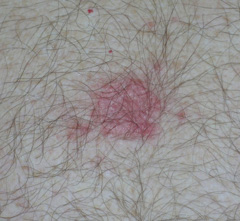
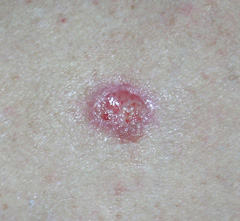
Acne (medically known as acne vulgaris and commonly known as blackheads, whiteheads pimples or zits) is a very common skin condition mostly seen in teenagers (for some people it can persist into adulthood). Acne continues to be the most common skin problem affecting up to 99% of teenagers as well as, to a lesser extend, young adults. Although acne eruptions are temporary, lasting anywhere from months to years, the disfigurement persists for life. Although mostly seen on the face, it can also occur on the neck, scalp, chest and back. Prevention of acne scarring and improvement of unsightly acne lesions is the most common reason for patients to seek medical attention. In addition, while not life threatening, acne can have a profound impact on social and psychological functioning. Early and appropriate therapy is needed to prevent long-term scarring and dyspigmentation from occurring.


There are many causes of acne including the following:
  1. Increased oil (sebum) production
  2. Presence of bacteria in the oil glands
  3. Plugging of the hair/oil gland units
  4. Inflammation

There are many types of acne. Just beneath the surface of the skin lie many tiny glands called sebaceous (oil) glands. Their function is to collect and excrete the oily substance called sebum, to keep the skin healthy. Acne is an inflammatory condition of the hair follicle/oil gland (pilosebaceous unit) and it happens when oils (sebum) are produced by active or overactive sebaceous glands. However, the tiny pathway for the sebum to escape often becomes clogged, and a bacterium grows inside. In a short time, the area swells up, and forms a pimple on the skin. This mostly happens during puberty under the influence of changing hormone levels.

In the presence of bacteria, especially propionibacterium acnes (P. acnes) the oils are converted to more inflammatory substances that lead to the development of blackheads (open comedones), whiteheads (closed comedones), red-inflamed bumps, pustules or cysts. When not treated properly, these changes can lead to permanent acne scarring and significant psychological effects.

Dr. Sapijaszko believes that the effective treatment of acne requires a thorough examination and history. Acne is a medical condition and it deserves to be treated in a professional manner deserving of expert care and attention. Appropriate therapy to ensure prompt improvement will help lead to long-term remission and minimize scarring and improve self-esteem.

Acne is treatable. Scarring is preventable. Treatment options need to be tailored to each patient. You and your face deserve the best care available and Dr. Sapijaszko and his team are ready to help.


ACNE TREATMENTS


What Acne Treatments Are Available?
The treatment of acne depends on the type of acne that a patient has. Since there are many different acne types, thorough assessment by Dr. Sapijaszko would be needed before specific therapy is recommended. It is important to have acne examined by a dermatologist as poor diagnosis and lack of experience can lead to inadequate therapy and resulting scarring.
Generally speaking, acne can be treated by one or the combination of the following modalities: washes, creams and lotions, chemical peels, oral medications (antibiotics, accutane or birth control pills) and light based technologies (laser, IPL, Blu-U or Aktillite). The choice of treatments depends on many factors including the type of acne that the patient has, prior treatments tried, age of the patient as well as individual preference.

  1. Topical therapies are usually the first treatment option as they can be used for the vast majority of acne patients. Topical retinoids such as tretinoin (e.g. Retin-A®, Tazorac®, Differin®) have been documented to help reduce the acne lesion count (both inflammatory [red bumps] and non-inflammatory [skin-colored or brown spots]) and severity of individual lesions. Their side effects are related to local irritation and can be decreased by introducing these preparations slowly and by controlling the amount of drug applied to the skin at each time.

  2. Topical antibiotics, particularly in combination with benzoyl peroxide or salicylic acid, are also very effective in the treatment of mild to moderate acne. It is advisable to use this drug combination (topical antibiotic with benzoyl peroxide), as this will greatly reduce the development of bacterial drug resistance. Furthermore, using topical antibiotic/benzoyl peroxide combination in the morning with topical retinoids at night will address most of the causes of acne. It will deal with bacterial component, altered skin desquamation and inflammation. It is because of these attributes that such a treatment combination is so effective.

  3. Chemical peels and topical salicylic acid are effective treatments against both comedonal [black and white heads] and inflammatory acne [red bumps and cysts]. These can also be very effective for early acne scarring.

  4. Systemic [oral] therapy is reserved for patients with moderate to severe acne that can result in scar formation. Oral antibiotics are mostly effective against inflammatory acne. They have both antimicrobial as well as anti-inflammatory properties. It is not advisable to maintain patients on prolonged oral antibiotic therapy limiting their continuous use.

  5. The most effective therapy for acne, and reserved for appropriate patients with severe acne, is oral retinoid, isotretinoin (Accutane®). It is a naturally occurring metabolite of vitamin A. It inhibits the sebaceous gland secretions and normalizes follicular epithelial desquamation. It is a teratogen and as such all women of child bearing potential require adequate pregnancy prevention measures during and for at least six weeks after the treatment.


Photodynamic therapy [such as Blu-U] is the newest modality to treat acne. It involves exposing the skin to special form of light. This form of light can be used either alone or in combination with a photosensitizer (preparation that makes the skin more sensitive to light) or not. This specific light exposure leads to the improvement of acne lesions over several treatment applications.


What is Blu-U Light Therapy for Acne?
The Blu-U Light device uses new light based technology to remove acne lesions safely and effectively. It is a non-invasive, pain-free treatment with no side effects. There is no use of any chemicals or drugs. Blu-U Light is the first acne treatment device to receive clearance for acne. It is suitable for all body areas including face and neck acne, chest acne, and back acne.


How does Blu-U Light Therapy work?
Blu-U Light therapy for acne is designed to improve acne without causing significant side effects. In fact it is one of the safest methods to treat acne available today. The bacteria that is present within the hair/oil gland apparatus creates the compounds that are largely responsible of the acne lesions. One of those compounds can interact with the special light that Blu-U emits. This interaction leads to decrease in bacteria count and improvement in acne lesions.


Acne | Youthful Image | Edmonton's Cosmetic Surgery Clinic | UltraShape Botox Restylane Sculptra Juvederm ThermaLift Artecol Facial Photo-Rejuvenation Glycolic Acid Rejuvenation Tumescent Liposuction IPL Hair Removal Acne | Youthful Image | Edmonton's Cosmetic Surgery Clinic | UltraShape Botox Restylane Sculptra Juvederm ThermaLift Artecol Facial Photo-Rejuvenation Glycolic Acid Rejuvenation Tumescent Liposuction IPL Hair Removal Acne | Youthful Image | Edmonton's Cosmetic Surgery Clinic | UltraShape Botox Restylane Sculptra Juvederm ThermaLift Artecol Facial Photo-Rejuvenation Glycolic Acid Rejuvenation Tumescent Liposuction IPL Hair Removal
Inflamed Acne
  Light Penetrates Into the Skin P. Acnes Bacteria Decreased


How many Blu-U Light treatments do I need?
The frequency and the number of Blu-U treatments depend on whether it is used as a standalone treatment (more frequent sessions are needed) or as a part of a combination treatment with topical creams, chemical peels or oral medications. When Blu-U is used as a standalone therapy, twice weekly sessions for six weeks are needed. More frequently, Dr. Sapijaszko recommends combination treatments with creams, chemical peels or even oral medications. In this case less Blu-U treatments are needed.


How long will each Blu-U Light treatment take?
Each session with Blu-U Light phototherapy will take about 16 minutes. If the treatments are combined with other modalities such as chemical peels, then more time per visit is required.


What are the side effects of Blu-U Light Therapy?
Blu-U Light therapy is very safe and with no chemical or drug use the side effects are virtually nonexistent. Specifically, there is no downtime, no irritation, no redness, no peeling, no scarring, or photosensitivity.


How does the Blu-U Light system compare to other acne removal treatments?
Blu-U Light therapy works best for acne that is characterized by blackheads, whiteheads and red/inflamed pimples. In these circumstances, Blu-U can be used alone and unlike oral therapies that require continuous treatment (over at least 3 months), it has proven to work much faster. Unlike oral therapies and topical drug therapies, the Blu-U Light treatments demonstrate no side effects and avoid the possibility of developing antibiotic resistance. In cases were the acne lesions are deeper and the possibility of scar formation is present, Dr. Sapijaszko may recommend a combination approach. In that case, Blu-U can be used with oral or topical preparations as well as chemical peels. Each patient is unique and the treatment approach depends on thorough examination.


TREATMENTS FOR ACNE SCARRING

Although acne eruption is temporary, the disfigurement persists for life and the prevention of acne scarring and improvement of unsightly acne lesions is the most common reason for patients to seek medical attention.  Early and appropriate therapy is needed to prevent long-term sequelae (scarring, dyspigmentation, and psychological impact) from occurring.  Once acne scarring is present, both patient and I are left with a number of therapeutic alternatives that can improve scar appearance.  Over the past two decades, great advances have been made in conventional surgical therapy, filler substances, as well as laser phototherapy.  These therapies, alone or in combination, can be used to significantly improve the appearance of acne scarring.


Prior to proceeding with any treatment, an appropriate classification of the scarring type is necessary. 
Acne scars can be divided into ice-pick, rolling, and boxcar scars.  In brief summary:
  1. Ice-pick scars are deep scars 1 to 2 mm in diameter that tend to taper at the bottom
  2. Rolling scars are generally caused by adhesive bands from the dermal subcutaneous junction [junction between skin and the fat layer] to tougher tissues close to the muscle layer.
  3. Boxcar scars are wider than ice-pick scars, measuring more than 3 mm in diameter and having vertical sides producing chicken pox-like scars

All these scars can be further divided into shallow and deep.  In addition to these three basic types of scars, the patient can present with hypertrophic [thick] scars either of a keloidal or non-keloidal type.  Decreased and increased pigmentation as well as persistent scar redness are also a frequent feature of post-acne sequelae.

Treatment of acne scars must be individually directed for each patient depending on the types of scars present.  Frequently, several procedures may need to be performed either at the same time or on multiple visits.  When surgical procedures require separate visits, a minimum of four to six weeks between the treatments is needed for adequate healing to occur. 

The good news is that most acne scarring can be improved with one or more of the above methods. There is hope for improving skin scarring once the active acne eruptions are controlled.


What can I do to treat acne scars?
There are many different acne scars. Some are elevated above the skin level whereas others are depressed below the skin levels. Dr. Sapijaszko is knowledgeable in the treatment of all acne scars. The treatments can include one of the following methods alone or in combination:
  1. Topical Home Preparations
  2. Chemical Peels and Microdermabrasion
  3. Laser or IPL Therapy
  4. Subcision
  5. Filler Substances
  6. Surgery (Excision or Grafting)

Topical Home Preparations
Almost all patients with acne scarring can benefit from topical preparations. As with acne treatments, these preparations include vitamin A acid derivatives such as Retin-A®, Tazorac® or Differin®. These preparations can help with new collage production and can be combined with more effective methods like chemical peels, microdermabrasion and laser or IPL therapies.

Chemical Peels and Microdermabrasion
Chemical peels can be of significant benefit to patients with acne scarring. Superficial (e.g. glycolic acid or salicylic acid) and medium depth (Jessner’s solution, trichloroacetic acid [TCA]) chemical peels can be used to successfully improve acne scarring. Generally, multiple peels in the concentrations above 35% are needed.
Different forms of microdermabrasion can also be used alone or in combinations with other modalities. Some newer forms of microdermabrasion use firm brushes and can also perform infusion of therapeutic substances into the skin.

Laser or IPL Therapy
Laser and IPL therapies can be very successful in the treatment of acne scarring. Almost all kinds of scars can be improved with these modalities. In this category, laser resurfacing, laser MicroPeel as well as fractional laser technologies can significantly improve acne scar contours. IPL as well as vascular lasers can be used to improve collagen and reduce the color of acne scars.

Subcision
Subcision is a relatively new technique designed to free the tethering fibrous bands that cause rolling scars.  Special needle is used to sever the tethering fibrous bands between deep layer of the skin and the deeper structures. Once the entire area to be subcised is infiltrated with local anaesthetic, the needle is inserted at the periphery of the scarred area.  Using a gentle sweeping motion (such as seen with car windshield wipers) the fibrous cords can be disrupted.  At least three insertion sites are used to allow a triangulated approach to heavily fibrous areas.  Subsequently, a compression dressing is applied in order to prevent excessive subcutaneous bleeding.

Filler Substances
Subcutaneous or dermal fillers such as autologous fat, collagen (e.g. Evolence or Evolence Breeze), hyaluronic acid derivatives (e.g. Restylane , Perlane, Juvederm , Puragen), and Sculptra can be used to achieve final optimal scar correction. As mentioned above, each acne scar represents its unique challenge and the kind of dermal filler selected has to match.

Surgery (Excision or Grafting)
Surgical excision, either elliptical or grafting is used for deeper boxcar scars. These methods can be very effective for the right scar. In most instances, following punch excision, punch grafting or punch elevation is needed to achieve optimal results.  This tissue resurfacing can be achieved through medium to deep chemical peels as well as laser skin resurfacing.

Frequently, combination treatments utilizing a variety of surgical procedures (punch excision, punch elevation, subcision, dermal fillers, punch grafting) are used in combination with a resurfacing modality (chemical peels or laser skin resurfacing).  Patients need to be counselled appropriately and understand that scar revision and management takes time and patience.  With appropriate selection of surgical and non-surgical modalities, a significant improvement in acne scarring can be achieved while maintaining an excellent safety profile.


Youthful Image
 
< Prev   Next >


Advertisement

Suite 950, 10665 Jasper Ave | Edmonton AB | 424-4440
© 2009 Youthful Image | Edmonton's Cosmetic Surgery Clinic | UltraShape Botox Restylane Sculptra Juvederm ThermaLift Artecol Facial Photo-Rejuvenation Glycolic Acid Rejuvenation Tumescent Liposuction IPL Hair Removal

Joomla! is Free Software released under the GNU/GPL License.